Fr
Fr De
De En
EnMinimum wage in France (SMIC) in 2026: Rates & regulations
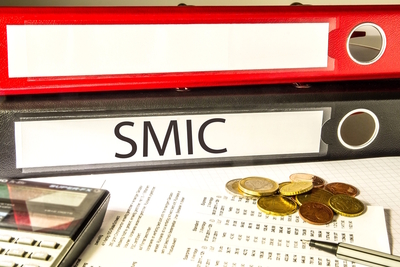
France has a nationwide statutory minimum wage, known as the SMIC. Since June 1, 2026, the French minimum wage has been €12.31 per hour and €1,867.02 per month (gross). We explain who is entitled to the SMIC and take a closer look at the current rates and their development over time.
2. French statutory minimum wage in 2026
3. When the minimum wage was introduced in France
4. Who is covered by collectively agreed minimum wages

The SMIC (Salaire minimum interprofessionnel de croissance) applies to all employees aged 18 and over, across all French regions, including mainland France, the overseas departments and the territorial collectivity of Saint-Pierre-et-Miquelon. It applies to:
- Private-sector employers
- Public administrative establishments (Établissement public administratif, EPA)
- Public industrial and commercial establishments (Établissement public industriel et commercial, EPIC)
The following rates apply to minor employees in France:
- Young people under 18 with less than 6 months of professional experience: 90% of the minimum wage
- Young people under 16 with less than 6 months of professional experience: 80% of the SMIC
There are also specific rules for people with disabilities and war-related injuries.
☝ Good to know: The SMIC applies regardless of the type of employment contract permanent or fixed-term and regardless of the type of remuneration. The minimum wage also applies to part-time employees, with the amount calculated according to the number of hours worked per week. It must be respected from the first day of employment, including during the probationary period.
On June 1, 2026, the nationwide minimum wage was increased again. The French minimum wage is calculated according to a formula set out in the French Labour Code. This formula takes two factors into account:
- the increase in consumer prices for the lowest-earning 20% of households
- the change in the basic hourly wage for manual and non-manual workers (SHBOE)
This method is designed to protect employees' purchasing power, particularly those most affected by rising living costs. Here are the current French minimum wage rates for 2026:
| Minimum wage (€/hour) | Minimum wage (€/month) | |
| Gross | €12.31 | €1,867.02 |
| Net | €9.74 | €1,477.93 |
(The monthly minimum wage shown is based on a 35-hour working week.)
⚖ A balanced approach: This increase in the national minimum wage for 2026 reflects a balance between different considerations. For employees, it is intended to support purchasing power in the context of continued inflation. For companies, the increase remains moderate enough to avoid undermining competitiveness.

The principle of a minimum wage was introduced in France at a very early stage, through the law of February 11, 1950. At the time, it was known as the guaranteed interprofessional minimum wage (Salaire minimum interprofessionnel garanti, abbreviated as SMIG). It was introduced to prevent poverty and stimulate consumer spending:
- Initially, it was calculated based on the typical needs of a single person living in France.
- The SMIG was subsequently linked to price increases.
In 1970, the name SMIG was changed to SMIC. Since then, the minimum wage has been reassessed annually based on price increases and changes in average wages.
The introduction of the 35-hour working week between 1997 and 2002 resulted in five different minimum wage rates. These were gradually merged, and since July 1, 2002, there has been only one SMIC.
Development and increases in the French minimum wage since 2018
| Year | Amount (gross/hour) | Amount (gross/month) |
| 2018 | €9.88 | €1,498.47 |
| 2019 | €10.03 | €1,521.22 |
| 2020 | €10.15 | €1,539.42 |
| 2021 (01/01 to 30/09) | €10.25 | €1,554.58 |
| 2021 (01/10 to 31/12) | €10.48 | €1,589.47 |
| 2022 (01/01 to 30/04) | €10.57 | €1,603.12 |
| 2022 (01/05 to 31/07) | €10.85 | €1,645.58 |
| 2022 (01/08 to 31/12) | €11.07 | €1,678.95 |
| 2023 (01/01 to 30/04) | €11.27 | €1,709.28 |
| 2023 (01/05 to 31/12) | €11.52 | €1,747.20 |
| 2024 (01/01 to 31/10) | €11.65 | €1,766.92 |
| 2024 (since 01/11) | €11.88 | €1,801.80 |
| 2025 | €11.88 | €1,801.80 |
| 2026 (01/01 to 31/05) | €12.02 | €1,823.03 |
| 2026 (since 01/06) | €12.31 | €1,867.02 |
📊 More figures: The increase in the minimum wage directly affects around 2.2 million French workers.

Most collective agreements (conventions collectives) provide for a collectively agreed minimum wage:
If the wage set by the collective agreement is lower than the SMIC, the employer must pay an additional amount to bring the employee's pay up to the SMIC.
If, however, the collective agreement provides for a minimum amount higher than the SMIC, the employer must pay the collectively agreed minimum wage.
The following amounts are excluded from the calculation:
- Reimbursement of expenses (including transport allowances)
- Overtime pay
- Profit-sharing payments
- Seniority bonuses, performance bonuses or bonuses related to specific working conditions (e.g. bonuses for difficult hygiene conditions)
- Holiday pay and year-end bonuses, unless they are paid in monthly instalments
- Paid breaks
Find out more:
- Minimum wage in Europe: Country ranking
- Average salary in Europe: Country ranking
- Legal minimum wage in Germany: Rates & regulations

Olivier Geslin









Articles suggérés sur le même thème